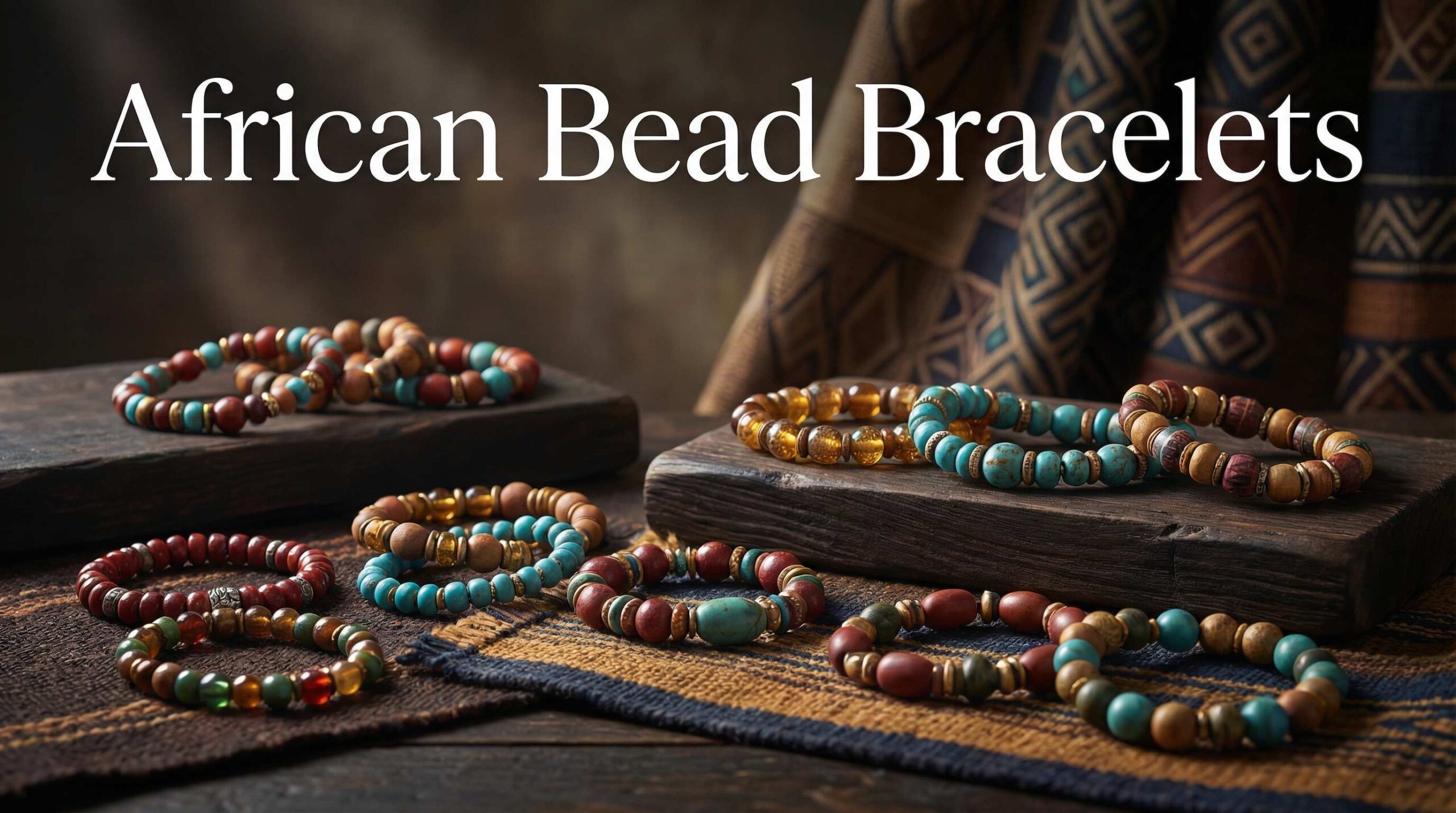


African bead bracelets are far more than just “boho” accessories found in gift shops. They are a vibrant, wearable language—a “living archive” that has communicated status, spirituality, and tribal identity for thousands of years.
Whether you are looking to buy your first piece or want to understand the history behind the strand on your wrist, this guide explores the deep cultural roots, symbolic meanings, and ethical ways to style these iconic pieces.
1. The Language of Color: Decoding the Meaning
In many African cultures, particularly among the Maasai of East Africa and the Yoruba of West Africa, colors are chosen with intention. When you wear an African bead bracelet, you aren’t just wearing a palette; you’re wearing a story.
| Color | Common Symbolic Meaning | Cultural Context |
| Red | Bravery, strength, and unity | Represents the blood of cattle (Maasai) or vitality (Yoruba). |
| Blue | Energy, sky, and rain | Symbolizes the life-giving water needed for crops and cattle. |
| White | Purity, peace, and health | Often associated with milk, a staple of sustenance and blessings. |
| Gold/Yellow | Royalty, wealth, and fertility | Represents the sun and the status of chiefs or noble families. |
| Green | Prosperity and the land | Tied to the health of the earth and the abundance of the harvest. |
| Black | Resilience and the people | Symbolizes the shared heritage and strength of the community. |
2. Regional Styles: From Ghana to South Africa
The “African bead” isn’t a monolith. Each region utilizes different materials and techniques that reflect its specific environment and history.
West Africa (Ghana and Nigeria)
West African beadwork is famous for Krobo glass beads and Ashanti powder-glass beads. Artisans in Ghana recycle old glass bottles, crushing them into powder and firing them in clay molds. These bracelets are often chunky, textured, and used in “coming-of-age” ceremonies to signify a woman’s transition into adulthood.
East Africa (Kenya and Tanzania)
The Maasai and Samburu people are the masters of intricate, flat beadwork. Using tiny glass “seed beads,” they create geometric patterns that indicate a person’s age-set and marital status. A stack of thin, brightly colored bracelets is a hallmark of Kenyan craftsmanship.
Southern Africa (South Africa)
Zulu beadwork is perhaps the most famous in this region. Traditionally, Zulu women created “love letters”—beaded messages given to partners where the patterns and colors revealed secret sentiments. Today, these techniques are used to create bold, contemporary cuffs and bangles.
3. How to Identify Authentic African Handmade Bracelets
With the rise of “African-style” mass production, it’s important to know how to spot a genuine, artisan-made piece.
-
Check for Imperfections: Authentic beads are often handmade from glass, clay, or bone. Look for slight variations in shape or size. If every bead is 100% identical and plastic-looking, it may be factory-made.
-
Weight Matters: Genuine glass or stone trade beads have a satisfying weight. Plastic imitations will feel light and “cheap” in your hand.
-
The “Cold” Test: Real glass and stone beads feel cool to the touch and take a moment to warm up against your skin.
-
Traceable Sourcing: Look for brands that name the specific community or artisan group (e.g., “Hand-strung by a women’s cooperative in Nairobi”).
Expert Tip: Support Fair Trade. Purchasing directly from artisan cooperatives ensures that the craftsmen and women receive a fair wage, helping to preserve these ancient techniques for future generations.
4. Styling Tips: How to Wear Them with Intention
African bead bracelets are incredibly versatile, fitting into both casual and formal wardrobes.
For a Casual Look
-
The Stack: Mix 3–5 thin Maasai seed bead bracelets of varying colors on one wrist. Keep the other wrist bare or wear a simple watch.
-
Natural Textures: Pair a chunky Krobo glass bracelet with a linen shirt or denim jacket to highlight the earthy textures.
For a Professional or Formal Setting
-
The Focal Point: Wear one high-quality, wide beaded cuff as a statement piece. This works beautifully with a crisp white blouse or a dark suit.
-
Color Coordination: Pick one dominant color from the bracelet (like deep blue or gold) and match it to a small detail in your outfit, like your tie or pocket square.
The Bottom Line
African bead bracelets are a bridge between the past and the present. When you wear one, you aren’t just following a trend; you’re honoring a craft that has survived centuries.